This time Starbucks isn’t opening a new store, it’s heading straight into the forest—and even the coffee grounds are going back to the earth
From thinning timber and coffee grounds to young trees, linking stores and forests into a cycle.

Summary
- Starbucks Coffee Japan launched the “Mori no Starbucks Project” in Minakami, Gunma Prefecture in July 2026.
- The plan is to conduct durability tests on thinned wood that was previously difficult to distribute, with the aim of using it in the future for store building materials and interior finishes.
- Coffee grounds from stores will be turned into compost, and young trees from the forest will be sent to 17 drive‑thru locations in Gunma Prefecture to be cared for for about three years, then returned to the forest.
Starbucks’ latest initiative is not a limited-edition drink or the announcement of its next Instagram-worthy store. Instead, it heads straight into the forests of Gunma Prefecture. From discarded thinning timber and the coffee grounds generated each day to young trees just emerging from the soil, the brand hopes to reconnect materials once seen as leftovers with its stores and the forest.
This time, it isn’t opening a store. It’s starting with the forest.

images from / Starbucks Japan
In July 2026, Starbucks Coffee Japan launched the “Mori no Starbucks Project” in Minakami, Gunma Prefecture. The project grew out of a partnership agreement the brand signed with Minakami in April 2025. With support from the Minakami Forest Utilization Council, it has continued to involve employees in forest maintenance and environmental education.
Minakami is located at the headwaters of the Tone River and has abundant forest resources. Rather than a one-time tree-planting event, the project aims to create a forest cycle that can operate over the long term through timber use, employee learning, local education, and store operations.
Wood that would be thrown away could become the next store

images from / Starbucks Japan
Forests need regular thinning to stay healthy. Yet some thinning timber, while structurally sound, is difficult to sell as standard construction lumber because it is small, curved, or knotted. Starbucks plans to deliberately use these materials, which would otherwise likely be discarded, to test their potential as store building materials or interior finishes.
In the first phase, five outdoor platforms were made for durability testing using three types of wood – cedar, oak, and chestnut – along with two wood preservatives. Rather than cutting the wood into uniform sizes, the platforms retain pieces of varying lengths and shapes to reduce waste during processing. Official data shows that this approach reduces the waste rate for each piece of wood from roughly 60% to 70% in conventional lumber processing to around 30% to 40%.
Coffee grounds and young trees are also returning from stores to the forest

images from / Starbucks Japan
In addition to timber, the project plans to bring coffee grounds from stores in Gunma Prefecture back to the forest. They will be mixed separately with local soil, fallen leaves, and bamboo chips in three composting experiments. After third-party testing confirms their effectiveness, the compost is expected to be used for landscaping around drive-thru stores in Gunma Prefecture.
Another initiative, the “Yamadori Sapling Nursery System,” will temporarily move young trees in the forest that are vulnerable to being eaten by animals to landscaped areas at 17 drive-thru stores in Gunma Prefecture. The stores will care for them for about three years before returning them to the forest for planting. So far, about 20 types of young trees, including oak and wild cherry, have been found in the forest.
Starbucks also plans to provide environmental education for employees in the forest, describing this natural space without walls or ceilings as a “third place” where people can converse with the Earth. For now, then, “Forest Starbucks” is not an actual new store built in the woods, but a long-term project that reconnects timber, coffee grounds, young trees, employees, and customers.
Join Popbee Circle and subscribe to the Popbee newsletter for the latest updates, and get early access to exclusive perks and discounts. In addition to this article, here are some recent stories worth checking out:
- This isn’t a sculpture, it’s a speaker! Fivefourfive turns Hi-Fi into a 2.35-meter-tall piece of architecture
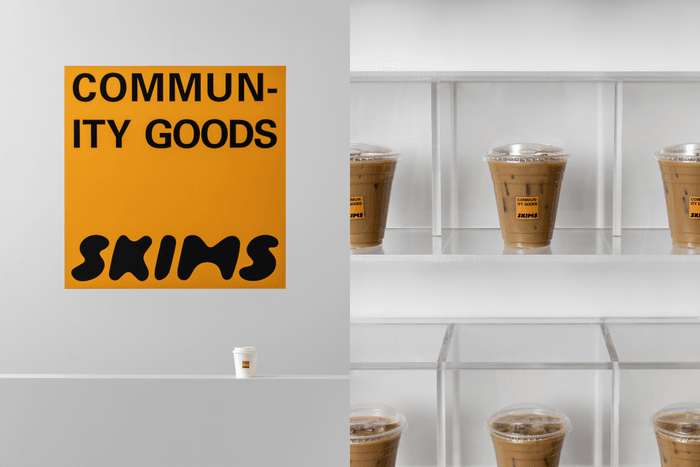
- SKIMS isn’t just selling clothes this time! Bringing popular Los Angeles coffee shop Community Goods to New York
- Pilates isn’t the only star anymore! More and more Korean female celebrities are practicing ballet, so what are the benefits for sculpting your figure?