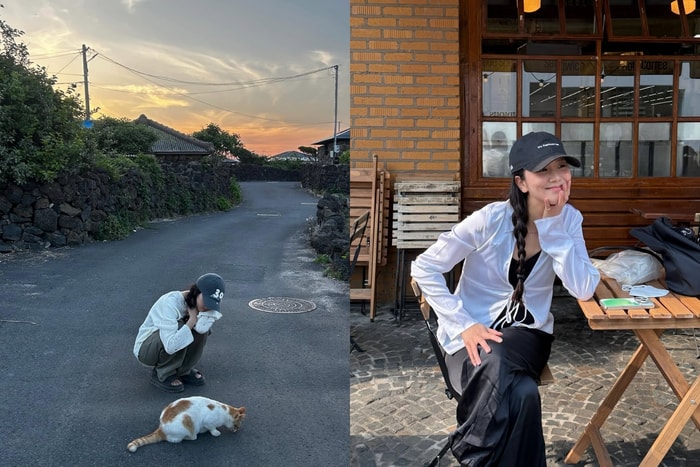
Unstoppable Wanderlust: The Desire for Adventure Written in Your Genes Might Explain Your Longing for Faraway Places
Can’t blame me this time, blame dopamine~

Summary
- DRD4-7R is a dopamine receptor variant often linked to thrill-seeking and novelty-seeking.
- Studies from the 1990s revealed that nomadic populations or groups that migrated further throughout history carry a higher proportion of this gene.
- The gene affects dopamine sensitivity, making people more willing to take risks when exploring the unknown.
- A love for travel isn't determined by a single gene alone; upbringing, environment, and life experiences play just as big a role in shaping the urge to explore.
Have you ever had this experience: your trip just ended, the wheels of your suitcase aren’t even wiped clean yet, and your fingers are already scrolling through flight comparison sites? Or maybe after living in the same city and following a steady routine for a while, a random sense of restlessness simply washes over you?
For many people, this state is often labeled as a lack of focus or pure impatience. But from a genetic standpoint, your deep longing for far-off places might not be something willpower can control. Scientists back in the 1990s discovered a gene variant in humans called DRD4-7R, even giving it a romantic nickname: the “Wanderlust Gene.”
- Related reading: Stop letting algorithms hijack your feed! Take control of what you see when you scroll
An exploration code hardwired into dopamine: What is DRD4-7R?
View this post on Instagram
DRD4 is the gene responsible for regulating dopamine D4 receptors in the brain, and 7R (the 7-repeat allele) is one of its specific variants. According to academic research from the late 1990s, this allele is present in roughly 20.6% of the global population.
Dopamine is the neurotransmitter the brain uses to convey pleasure, achievement, and motivation. Studies show that people carrying the DRD4-7R variant have brain receptors that are relatively less sensitive to dopamine. In other words, daily routines and predictable settings yield less satisfaction for them. To achieve the same psychological rush and excitement, they naturally crave intense stimulation, novel experiences, and high-reward challenges. In psychology, this is known as high novelty-seeking—the maze-like alleys of an unfamiliar foreign city light up their spirit far more than a familiar neighborhood café.
The legacy of ancient nomads: Farther journeys, higher gene prevalence
View this post on Instagram
Calling it the “Wanderlust Gene” isn’t just poetic phrasing from modern times; it rests on solid evolutionary anthropology. Research in 1999 led by institutions including the University of California revealed that groups with longer historical migration routes and nomadic lifestyles had a significantly higher percentage of the DRD4-7R gene than farming populations rooted in one place.
In ancient times, stepping into the unknown meant serious danger: sudden weather shifts, wild beast attacks, or food shortages. Yet a tribe always needed people willing to step out of the safe zone and cross mountains to find new water sources and hunting grounds. Carriers of the DRD4-7R gene were naturally more inclined to take risks and tolerate uncertainty, a trait that became a vital asset for expanding survival territory in the evolutionary process. The urge to travel you feel today might just be the instinct of ancient explorers running through your veins.
A reason for self-acceptance, not genetic destiny
View this post on Instagram
Of course, modern behavioral genetics constantly reminds us that complex human emotions and life choices are never dictated by a single gene. Whether someone loves to travel is shaped just as much by family background, upbringing, finances, and current life circumstances.
Even so, understanding the existence of DRD4-7R brings its own unique comfort. Society often expects everyone to settle down early and adapt to a routine, overlooking that human diversity naturally includes a built-in share of explorers. If you find it impossible to feel at peace in predictability, always longing to roam unfamiliar lands, try new foods, or learn a foreign language, don’t doubt your ability to focus. Embrace the pure curiosity in your soul, and the next time the urge hits, pack your bags without second-guessing yourself.
Join POPBEE Circle and subscribe to the POPBEE Newsletter to get the latest updates right away, plus early access to exclusive perks and discounts! Beyond this story, here are a few recent articles you won’t want to miss:
- Over-cherishing is actually another kind of waste! Don’t let the things you love expire in the cabinet, let them take part in your life
- How do you keep a long-term relationship from getting boring? For anyone who feels the spark is fading, here are 5 small daily habits to stay in love
- Your exhaustion might be caused by the people around you! Science proves emotional burnout speeds up aging, adding 9 months for every extra “hassler”